


LINE: Disney Tsum Tsum
3.967.84K Reviews
App Specs
- Version
- 12.9.1
- Updated On
- License
- Free
- Downloads
- 10,000,000+
- Developer
- LINE (LY Corporation)
- Categories
- Puzzle
- Platform
- Android
Screenshots
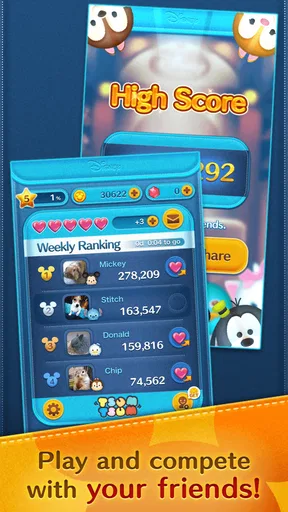
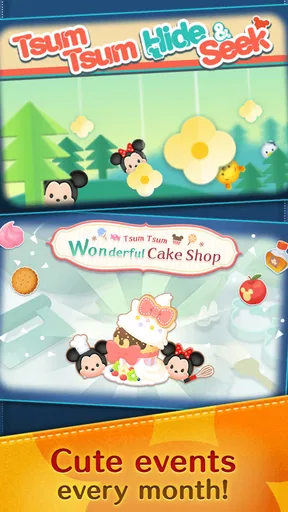
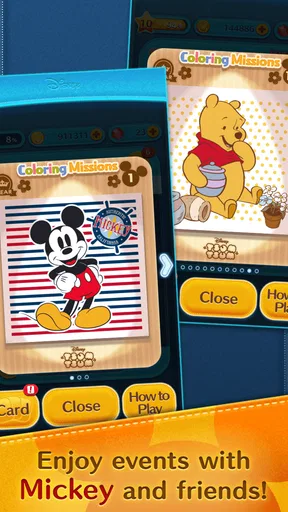
 Analysis by AppCompare
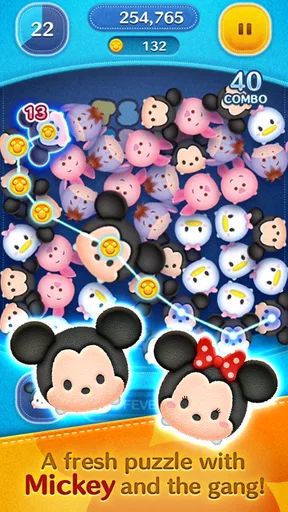
I found LINE: Disney Tsum Tsum easy to pick up, but more interesting to examine when you look at how it fits different players and everyday situations. It is a free puzzle game from LINE (LY Corporation), built around short rounds, familiar Disney characters, and a simple touch interaction. The basic idea is immediately understandable: connect matching Tsum Tsum characters before the timer runs out, create longer chains, and use the resulting score to keep progressing.
That simplicity is its strongest quality. I can open it when I have only a few minutes, play a round without studying a complicated rulebook, and stop without feeling that I have abandoned a long session. At the same time, the timed format, small visual targets, and frequent pressure to improve scores mean it is not equally comfortable for everyone. My experience is that the game works best for players who enjoy quick, lively puzzles and Disney presentation, while people who need a calm, spacious, highly adjustable interface may find it tiring.
How clearly the game communicates what to do
The first few moments are friendly because the central action is visible rather than hidden behind a complicated menu. The screen presents a crowded group of rounded character faces, and I only need to trace a path through matching ones. That makes the learning curve much gentler than in puzzle games that introduce several tile types, special powers, or layered objectives before allowing a proper first move.
The rounded Tsum Tsum designs also help the game feel visually distinct. Each character has a recognizable face and color treatment, which makes scanning the board more pleasant than looking at anonymous jewels or numbered blocks. Disney familiarity can be useful here: a player who already knows the characters may identify them faster, especially during a hurried round.
However, readability is not the same as simplicity. The play area can become visually busy when many characters, effects, score changes, and animations appear together. I sometimes have to pause mentally for a moment after a large chain to understand the new arrangement. A player who relies heavily on shape, color, or facial detail may experience different levels of comfort depending on the character mix on screen.
The navigation outside the puzzle is approachable, but the game has more going on than the core action suggests. Players move between the main play area, character-related choices, progress screens, and reward or purchase areas. I recommend taking a few minutes to explore these screens when you are not in a hurry. That makes it easier to distinguish an optional offer from something needed to continue, which is particularly helpful for children or anyone who prefers clear, predictable navigation.
The game is rated for Everyone, and that matches its cheerful presentation and straightforward puzzle concept. Still, an age rating does not mean every screen will feel equally easy to interpret. Younger players may understand the tapping and tracing quickly but still need guidance around in-game currency, optional purchases, and the difference between a temporary boost and a lasting unlock.
Worth Reading Before You Choose

EA SPORTS FC Mobile 26 Is a Bigger Football Game, but It Takes Time

Flipboard Shows What News Apps Must Do Beyond the Feed

Switching to Android Auto Means Rethinking Your Driving Routine

Google Calendar Makes a Crowded Week Easier to Manage

Ludo King Makes the Most of the Minutes Between Plans

Baby Panda World Brings Quick Play to Modern Phones, but Its Game Library Feels Busy
One useful habit is to treat the opening screen as a launch point rather than immediately tapping the most colorful button. I found that checking the available goals first gives each round more purpose. Instead of simply chasing a high score, I can decide whether I am trying to clear a certain kind of board, complete a daily task, or practice a particular character. This reduces random tapping and makes the experience more manageable for players who benefit from a clear plan.
What the short rounds feel like in practice
The timed structure changes how I read the board. I am not calmly solving a static arrangement; I am scanning, choosing, and moving almost continuously. That creates a satisfying rhythm when my finger movement is accurate. Longer chains feel rewarding because they combine visual recognition with a small amount of route planning, and the immediate feedback makes even a brief session feel complete.
It also creates a meaningful trade-off. A player with quick visual processing and confident touch control can enjoy the urgency, while someone who needs extra time to distinguish similar faces may feel that the clock is working against them. The game does not become impossible for slower players, but the scoring pressure can make the same puzzle feel more demanding than its cheerful appearance suggests.
I especially like using it as a transition activity: a few rounds while waiting for an appointment, during a short break, or after finishing a task. It is less suitable when I want a quiet puzzle that rewards careful thought without interruption. In that situation, a traditional non-timed matching game or a turn-based logic puzzle would probably be a better fit.
Touch control, visual comfort, and different abilities
The main gesture is natural on a touchscreen. I drag through connected characters, and the action feels more direct than repeatedly tapping individual pieces. For players with accurate finger control, this is a major strength. There is no need to learn a complex control scheme, and the game can be understood through movement rather than text alone.
That same gesture can be a barrier for people with tremors, limited range of motion, difficulty maintaining contact with the screen, or trouble making quick directional changes. A chain may break because the finger leaves the intended path, not because the player misunderstood the puzzle. In my view, this is one of the most important limitations to consider before recommending the game to someone with motor challenges.
The pressure is amplified by the short round format. In a slower puzzle, a missed touch is merely inconvenient. Here, a missed connection can cost several seconds of decision-making and reduce the chance of building a strong chain. Players who use one hand, play on a smaller phone, or need to keep their grip relaxed may find a larger screen more comfortable, although the game itself remains a touch-first experience.
Visual effects add energy, but they can also become distracting. Character movement, chain responses, score changes, and celebratory moments all compete for attention. I enjoy that feedback when I am focused, yet I would not describe the presentation as visually quiet. Anyone sensitive to motion, flashing transitions, or dense animation should approach it cautiously and see whether a short session feels comfortable.
Color recognition is useful, but it should not be the only thing a player depends on. The characters have faces and silhouettes, which gives the board more information than color alone, but some rounds can still feel crowded. For a player with color-vision differences, the practical question is whether the character faces remain distinguishable at the speed required. My advice is to test the game in a relaxed session rather than judging it from the cheerful screenshots or the first few easy moves.
Sound can make the game feel more responsive, but the visual feedback is central enough that I can still understand the basic action without treating audio as the main guide. This matters in shared spaces. I can play quietly while waiting in a public place, provided the surrounding movement and the small screen do not make the board harder to follow.
One non-obvious advantage is that the game supports a gradual learning approach even though the rounds are fast. I can begin by focusing on short, safe chains instead of trying to maximize every move. Once the finger path feels reliable, I can work on longer connections and faster scanning. This is more comfortable than immediately chasing expert-level play, especially for someone developing touch confidence.
Why character choice can affect more than collection
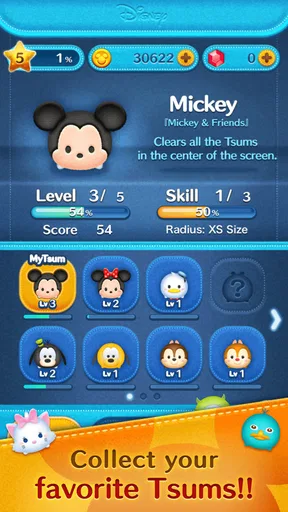
The Disney cast is not only decoration. Different characters can change how quickly I recognize a possible move, how emotionally enjoyable a session feels, and how motivated I am to continue. A familiar favorite may make the board easier to scan because I identify it instantly, while a less familiar design may take longer to separate from nearby pieces.
That creates a small but real accessibility consideration: personalization can influence clarity. If a player finds certain faces easier to distinguish, choosing those characters when possible may make the board less mentally demanding. I would not treat this as a substitute for formal visual settings, but it is a practical way to make the existing presentation work better for an individual player.
There is also a motivational difference between players who enjoy collecting recognizable characters and those who only want a pure puzzle. The former may tolerate repetitive rounds because the cast gives progress a personal flavor. The latter may prefer a minimalist matching game where every element exists only to serve the logic. This title is much more character-driven than a plain puzzle board.
Playing in real-world situations
I can easily imagine playing it during a commute, but only when I am seated and the device is stable. The quick rounds are convenient for a waiting room or a short break, yet they are not ideal while walking, standing on a moving vehicle, or dealing with frequent interruptions. A missed touch is frustrating enough at home; in motion, the entire board becomes harder to track.
For a parent, the game can work as a shared activity. An adult can explain the matching gesture, help a child understand the menus, and set a clear boundary around optional purchases. The Everyone rating makes the presentation approachable, but the free-to-play structure still deserves supervision when a child is using a device with payment access.
For older players, the familiar Disney theme may be inviting, and the central gesture is easier to explain than a complicated controller layout. The potential difficulty is speed rather than rules. Someone who enjoys puzzles but finds rapid touch movement tiring may prefer playing only a few rounds at a time, using the game as a light diversion rather than a long session.
It is also a reasonable choice for players who do not want to commit to a large story campaign. I do not need to remember a plot, manage a party, or learn a world map before enjoying the puzzle. That makes it more approachable than many mobile games with lengthy tutorials. On the other hand, players looking for deep strategic planning, a substantial narrative, or a completely offline-style experience may find the format too lightweight or too dependent on ongoing progression.
The game is free to install and play, which removes the initial price barrier. Optional in-app purchases range from $1.99 to $49.99 per item, so I would recommend deciding in advance whether purchases are part of the experience. The low-cost entry is appealing, but the wide purchase range means the game is not automatically a no-spending environment simply because it costs nothing to start.
My practical approach is to play without buying anything during the first several sessions. That reveals whether the basic loop is enjoyable on its own and whether the pacing suits the player. It also prevents a common mistake: spending to solve a problem that is actually caused by unfamiliar controls or poor timing. If the game remains fun without purchases, any later spending becomes a deliberate choice rather than a reaction to frustration.
How it compares with other puzzle choices
Compared with traditional match-three games, this one feels more active because I trace chains directly instead of waiting for a swap to resolve. That makes it more physical and immediate, but also less forgiving. A player who likes planning several moves ahead may prefer a slower match-three board, while someone who enjoys quick hand-eye coordination may find the Tsum Tsum approach more satisfying.
Compared with word puzzles, it asks less of language and more of visual recognition. That can be a benefit for players who want a puzzle that does not depend on vocabulary, but it removes the reflective quality that makes word games relaxing for many people. Compared with minimalist color-matching games, the Disney characters add personality and collection appeal, though they also make the screen busier.
Compared with large role-playing games, it is much easier to enter and leave. There is no need to reserve an evening for it. Yet that convenience comes with less narrative depth and less room for long-term strategic experimentation. I would recommend it to someone who wants a polished pocket distraction, not to someone searching for a complete console-style adventure on a phone.
The most important comparison is with non-timed puzzle apps. Those are usually better for players who need to pause, enlarge their thinking time, or avoid performance pressure. This game is better when the player enjoys a lively challenge and finds satisfaction in improving speed and accuracy. Neither style is universally superior; they serve different moods and abilities.
Barriers that still matter
The biggest remaining barrier is the combination of small visual targets and time pressure. Even when the rules are clear, the player must identify a route and maintain a precise drag quickly. That can exclude people who would otherwise enjoy the matching concept. The game’s friendliness is therefore strongest at the level of presentation, not necessarily at the level of physical demand.
Another limitation is cognitive clutter. Rewards, character progression, goals, and optional spending can make the surrounding experience feel more complicated than the puzzle itself. I would have preferred a more obvious separation between “play now” and “manage progress.” When I am tired, I want to reach the board without sorting through several competing reasons to tap elsewhere.
Session length is flexible in practice, but the design encourages repeated attempts. A player may finish one round and immediately want to improve the score, complete another objective, or try a different character. That loop is enjoyable for some people and difficult for others who are trying to limit screen time. Setting a personal stopping point before starting is a simple way to keep the game in its proper role as a short break.
Device context also matters. On a small phone, the board can feel cramped, particularly for players with larger fingers or reduced precision. On a bright screen in direct sunlight, visual effects and small details may be harder to read. In a dark room, the vivid presentation may feel more intense than expected. These are ordinary mobile-use conditions, but they affect whether the game feels comfortable from one session to the next.
The current version is 12.9.1, and the game supports devices running Android 8.0 or later. That makes checking the phone’s operating system worthwhile before trying to install it, particularly on an older device kept for a child or a family member. The game has been available since June 30, 2014, and its long presence helps explain why it feels like an established mobile puzzle rather than a brief experiment.
Its audience is substantial, with over 10 million installs, an average rating of 3.9 from around 545 thousand ratings, and roughly 68 thousand written reviews. Those figures suggest broad interest, but they do not remove the personal fit question. A popular game can still be wrong for someone who dislikes timed gestures, busy animation, Disney themes, or free-to-play progression.
Who I would recommend it to
I would recommend it to Disney fans who want a quick puzzle, casual players who enjoy improving a personal score, and families looking for a simple game that can be explained in a minute. It is also a good choice for someone who likes touch-based action more than turn-based thinking and wants a session that can begin and end quickly.
I would be more cautious recommending it to players with motor difficulties that make sustained dragging uncomfortable, people who are sensitive to dense animation, and anyone who needs a completely calm interface with generous timing. I would also point frequent puzzle enthusiasts toward a slower match-three or logic game if their main goal is deep planning rather than rapid recognition.
For a first session, I suggest playing in a quiet, seated setting, keeping the sound at a comfortable level, and concentrating on reliable short chains. Explore the menus only after the basic gesture feels natural. If the screen remains easy to follow and the time limit feels exciting rather than stressful, the game is likely to suit you. If the board feels crowded or your finger repeatedly loses the intended path, another puzzle style may offer a better experience.
Overall, I see LINE: Disney Tsum Tsum as a charming but physically demanding casual puzzle. Its strongest inclusive quality is how quickly it explains the central idea through recognizable characters and direct touch movement. Its main weakness is that the same fast, animated design can create barriers for players who need more time, less motion, or more precise control options.
My inclusive verdict is positive with clear limits: it is worth trying if you want a free Disney-themed game that fits short breaks and rewards quick visual matching. I would not present it as universally accessible, because the timed dragging and crowded presentation matter. For the right player, though, the combination of familiar characters, immediate feedback, and compact rounds makes it an enjoyable daily diversion rather than just another disposable matching game.
Pros
- Simple tap-and-swipe controls make matches easy to learn.
- Disney character collection adds strong appeal for fans.
- Short rounds fit well into quick gaming sessions.
- Frequent events provide new goals and limited-time rewards.
- Cute animations and sound effects make gameplay feel lively.
Cons
- Energy limits can interrupt longer play sessions.
- Progress may feel slow without spending coins or premium items.
- The large character roster can make upgrades feel overwhelming.
- Some events require regular play to claim all available rewards.
- Performance may vary on older phones during busy effects.
FAQs for LINE: Disney Tsum Tsum
What is LINE: Disney Tsum Tsum and how is it played?
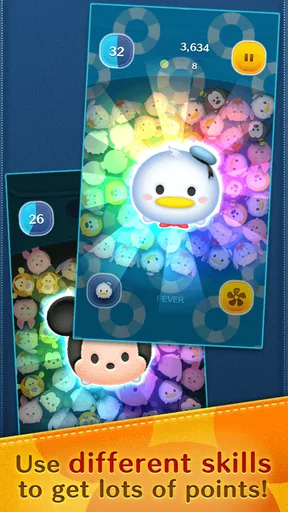
LINE: Disney Tsum Tsum is a casual puzzle game based on Disney and Pixar characters. The main objective is to connect and clear three or more matching Tsum figures by swiping across them before time runs out. Each character has a unique skill, so choosing the right team and activating skills at the best moment can significantly improve your score and coin earnings.
Is LINE: Disney Tsum Tsum free to download and play?
The game is free to download on supported Android and iOS devices, and you can progress without paying. However, it includes optional in-app purchases for items such as premium currency, extra resources, or special offers. You can enjoy regular gameplay without spending money, although collecting certain characters or progressing more quickly may require patience or optional purchases.
Does LINE: Disney Tsum Tsum require an internet connection?
An internet connection is generally needed for important features, including signing in, receiving updates, accessing events, synchronizing progress, and using social or ranking functions. Some basic gameplay may appear to work temporarily when offline, but the experience is designed around online connectivity. A stable connection is recommended to avoid interruptions or lost progress.
Can children play LINE: Disney Tsum Tsum safely?
The game is colorful, simple to understand, and suitable for many casual players, including children. Nevertheless, parents should review the age rating, advertising, social features, and in-app purchase settings before allowing younger users to play. Because the game uses collectible characters and limited-time events, setting purchase restrictions can help prevent accidental spending.
Does LINE: Disney Tsum Tsum support progress transfer between devices?
Progress transfer depends on the account or platform connection used when the game is set up. To reduce the risk of losing characters, coins, or achievements, link the game through the available account options and avoid deleting the application before confirming that your data is synchronized. Moving between Android and iOS may have additional limitations, so check the current transfer instructions first.


